Restoring Eden
Nov 06; May 07; Sept 07; July 08; Sept 08; Feb 09; July 2010; April 2012; Sept 2013; January 2014; February 2014; May 2014; July 2014; August 2014; January 2015; August 2015; October 2015; February 2016; May 2016; August 2016; October 2016; 2017; 2018; 2019-20; 2021; 2022; 2023; 2024
Nov 06:
When we bought the property in 2003 both the land and the buildings were in need of a great deal of work. The apple orchards had been long neglected and had ceased to produce. The roof of the main farmhouse leaked in more places than we had buckets. The land was so overgrown it had become all but impassable.
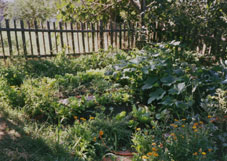
We have just completed the first phase of what will be a lengthy process of restoration and bringing the land slowly back into production. We repaired the roof of the main farmhouse and made it habitable, pending its eventual restoration as and when funds allow. We demolished a jumble of outbuildings that stood between the main farmhouse and its view. Many a long hot day has been spent clearing overgrown tracks across the land and reclaiming the garden and vegetable plot.
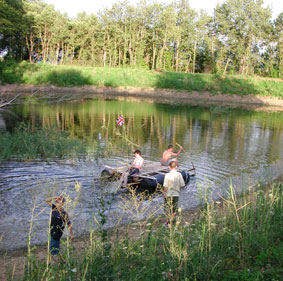
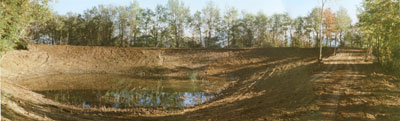 The irrigation lake, essential to our plans for replanting, had disappeared to a muddy puddle amongst a tangle of trees: very 18th- century-picturesque but no practical use. Three years on, it has been cleared, relined with clay and is full of water (and newts and frogs). The irrigation lake, essential to our plans for replanting, had disappeared to a muddy puddle amongst a tangle of trees: very 18th- century-picturesque but no practical use. Three years on, it has been cleared, relined with clay and is full of water (and newts and frogs).
 However, our biggest project in 2006 was to complete the Garden House, a substantial stone-built house in a spectacular position on the terraced hillside above the main farmhouse. Around it we are planting a garden for the senses: scented old roses, irises and peonies, aromatic herbs, fruit and vegetables: see Plant List. (See the Rentals section for more about the Garden House, now under its Italian name of Casa dell’Ortolano.) The plan is to use income from holiday rentals to subsidise the myriad projects we have for the land: first amongst them being to clear one of the old apple orchards and replant part with olives and part as mixed orchard. However, our biggest project in 2006 was to complete the Garden House, a substantial stone-built house in a spectacular position on the terraced hillside above the main farmhouse. Around it we are planting a garden for the senses: scented old roses, irises and peonies, aromatic herbs, fruit and vegetables: see Plant List. (See the Rentals section for more about the Garden House, now under its Italian name of Casa dell’Ortolano.) The plan is to use income from holiday rentals to subsidise the myriad projects we have for the land: first amongst them being to clear one of the old apple orchards and replant part with olives and part as mixed orchard.
May 07:
As at May 2007, we are in the process of applying for “agriturismo” status in order to further this objective. We have replanted the terraces closest to the main farmhouse with a mixed orchard and a variety of soft fruits, destined for the use of our guests, and once the holiday rental side of the business has completed its first season we’ll be able to start planning the next phase of investment in the farm.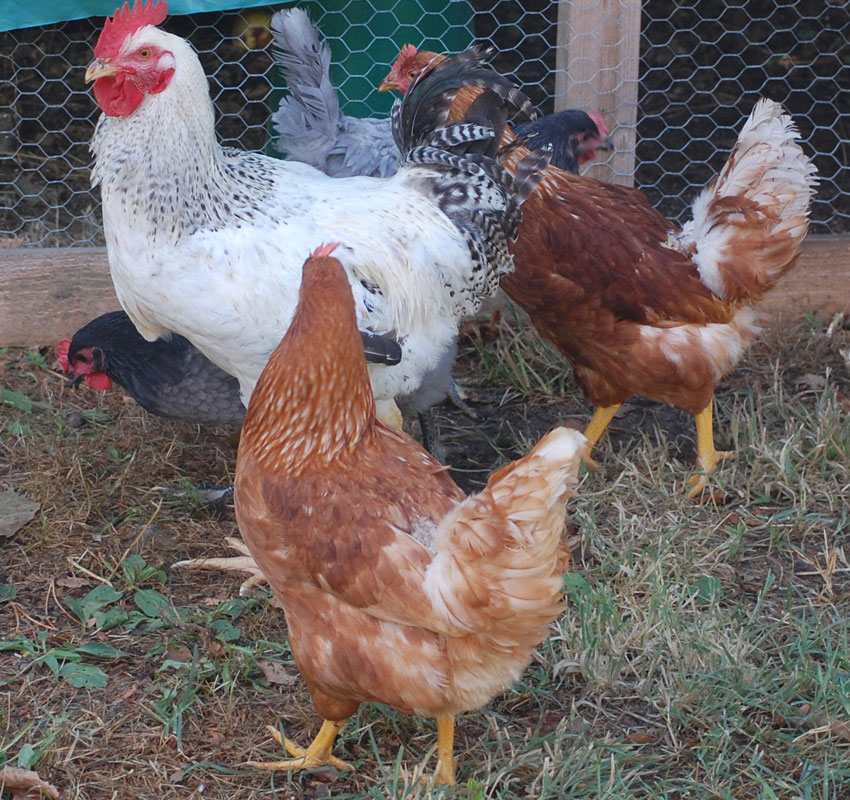
Sept 07:
We now have a little flock of free range chickens.
July 08:
The lake is currently a muddy puddle after two years of near drought, whereas in May 06 it was over 4 meters deep. Although this year has seen the return of the spring rains, this has been too little to remedy the situation. We are in the midst of a long drawn out legal battle over a neighbouring lake, over which we had negotiated a right to buy at the time we bought Casa Nova. The owner has sold it in breach of our right. The situation is all the more galling as, being further down the hillside, it is brim-full of water. We are learning the hard way about the intricacies and delays of the Italian legal system.
We are currently building a new swimming pool for the main farmhouse and planning the phased restoration of the main farmhouse itself. If funds and the weather allow, we will start the process of replanting with olives this autumn.
Sept 08:
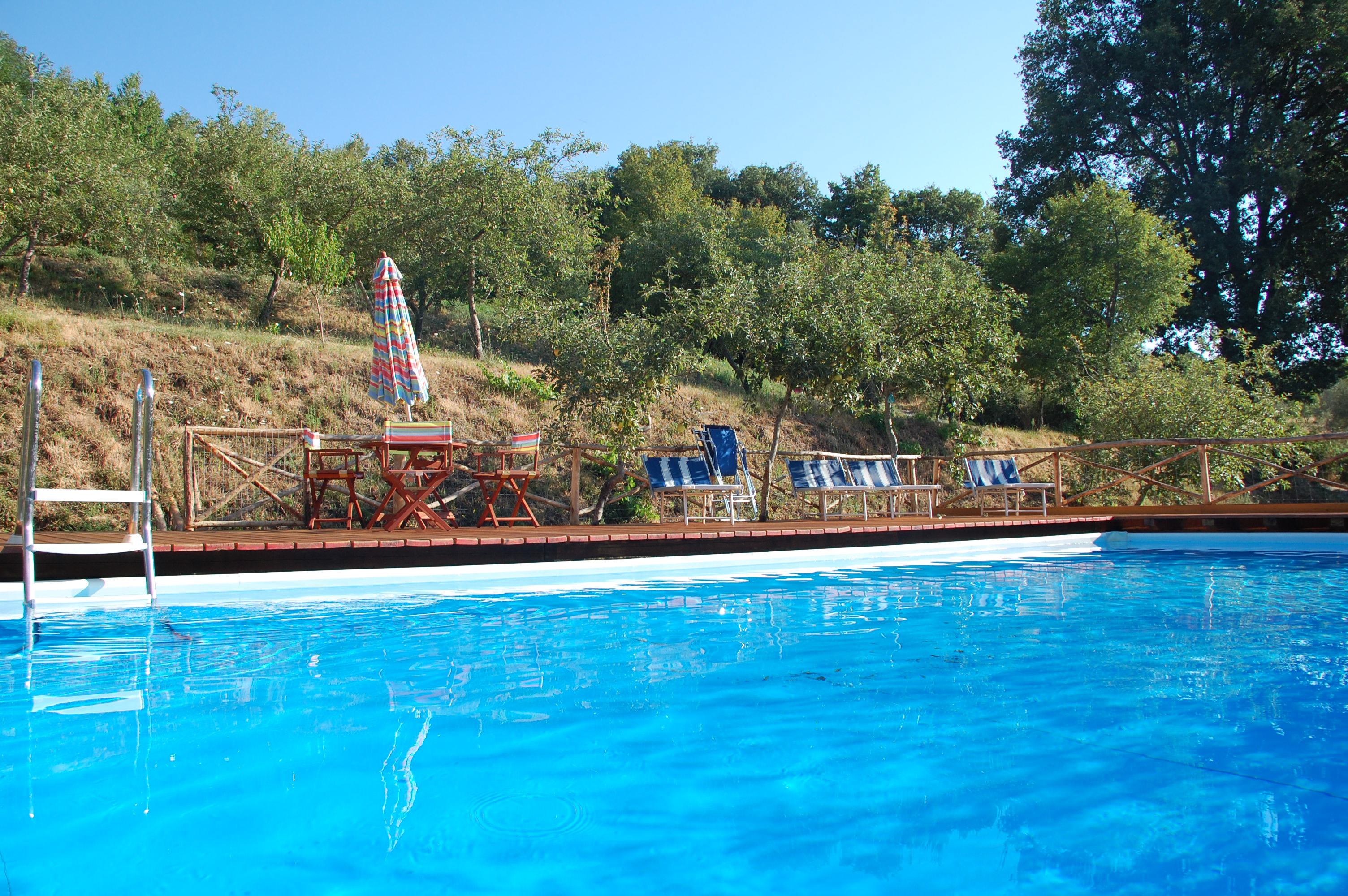
The new pool for the main farmhouse is completed and is stunning (see photo below) but so far over budget that olive planting may have to wait a bit. We’ll get some quotes and then decide. Our remaining funds this year may need to go on installing cisterns and digging a well, since our own lake is now dry (and the lake we had a right to buy has been sold from under our noses, see above). We are now officially an agriturismo: the bureaucracy involved included our having to get a certificate vouching for the fact we are not Mafiosi. However, after the pool was already built, we were told that a new law has come in which means that an agriturismo must have a lifeguard for a pool over a certain depth (which the new one is). We declined the suggestion that the builder simply pour concrete into the bottom to reduce the depth. We’re hoping the law will be modified before next season (don’t they know you can drown just as easily in 3 inches of water?) On one day this summer we had visits from the polizia forestale (we’d been “denounced” for landscaping the earth that came out of the pool excavation - turns out the permissions we had to build the pool didn’t cover this) and the ufficio delle entrate (VAT inspectors) who arrived unannounced and asked question for 4 hours (such as “how many chickens do you have?” answer: we’ve never counted). Just some of the realities of trying to do things by the book in a country where the rules are fiendishly complex and the powers that be start from the assumption that everyone is breaking them. On the up-side: this summer the vegetable garden has produced the best tomatoes yet (amongst much else); 8 eggs a day from the chickens; day after day of perfect weather whilst friends in England report day after day of rain...
 |
Feb 09:
We’ve decided to defer olive planting for this year, amidst competing priorities, and have invested instead in clearing the channels that collect rainwater from the hillside and carry it to the lake. These had become completely choked with trees and brambles but are now cleared and lined with plastic covered with earth, and so instead of disappearing underground the water is now making it to the lake, which (as of this week, as a snowfall was melting and the ground is saturated) is refilling at a rate of 12 litres a minute. Hurray! Let’s hope it continues. 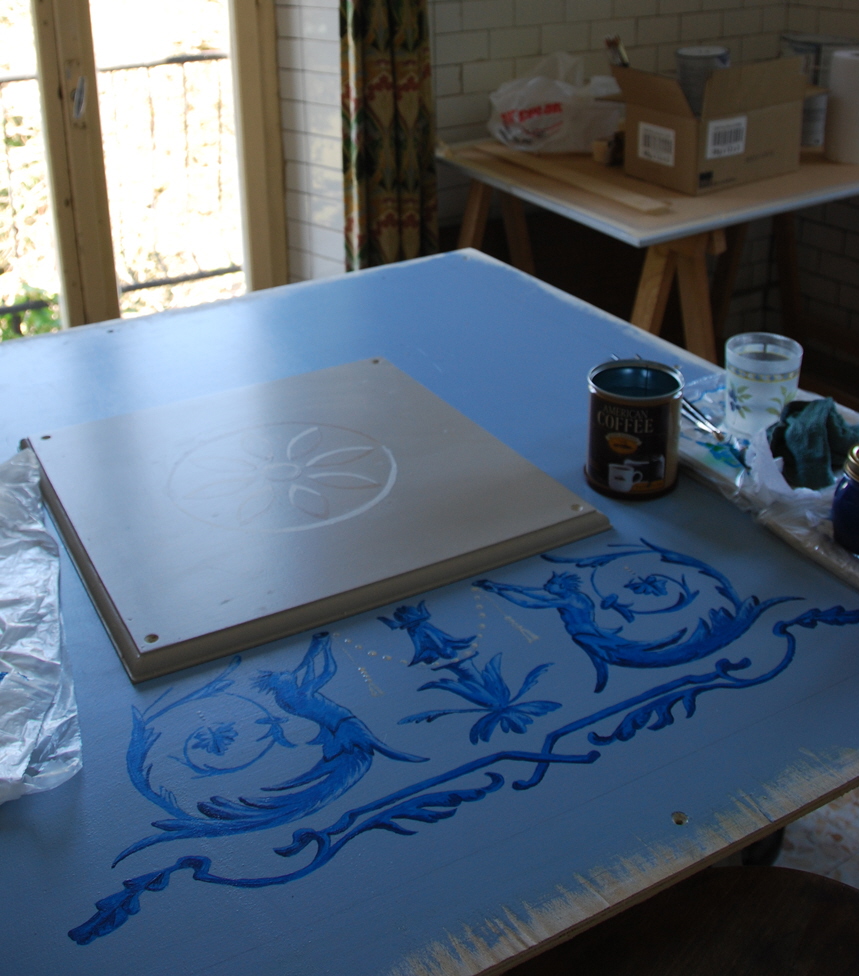 This month has been a mad dash to plant around the new pool whilst the ground is soft and damp and before things start into growth: formal planting close to the pool (with box and lavender hedges surrounding roses), an informal mix of drought-tolerant plants on the banks below (phlomis, rosemary, russian sage, myrtle, curry plant). More to follow when my cuttings of various lavenders are ready for transplanting. The chickens have been getting more adventurous and ranging further and further from their run when allowed out: they’ve been at the flower beds, scattering the mulches I’d just put down. They also turn out to be rather fond of the cat food we put down for the various strays who’ve adopted us. We had our first home-raised ducks and geese for Christmas dinner (after lengthy negotiations with the kids) but so far the chickens are sacrosanct. As we now have 5 cockerels, we may need to review this policy soon. The other project in hand at the moment is painting a “casettone” ceiling for the sitting room of the Garden House: trompe-l’oeil grisaille central panels and a border around these of Renaissance-style grotesques. Check on the Work In Progress here. This month has been a mad dash to plant around the new pool whilst the ground is soft and damp and before things start into growth: formal planting close to the pool (with box and lavender hedges surrounding roses), an informal mix of drought-tolerant plants on the banks below (phlomis, rosemary, russian sage, myrtle, curry plant). More to follow when my cuttings of various lavenders are ready for transplanting. The chickens have been getting more adventurous and ranging further and further from their run when allowed out: they’ve been at the flower beds, scattering the mulches I’d just put down. They also turn out to be rather fond of the cat food we put down for the various strays who’ve adopted us. We had our first home-raised ducks and geese for Christmas dinner (after lengthy negotiations with the kids) but so far the chickens are sacrosanct. As we now have 5 cockerels, we may need to review this policy soon. The other project in hand at the moment is painting a “casettone” ceiling for the sitting room of the Garden House: trompe-l’oeil grisaille central panels and a border around these of Renaissance-style grotesques. Check on the Work In Progress here.
July 2010:
We’ve completed a first phase of restoration on the main farmhouse (the roof was in too poor a state to wait any longer). This has included a heating system that combines solar, a wood fired boiler (that uses logs, pellets or wood chip) and a gas boiler that kicks in only when those don’t suffice. The boiler room is an impressive sight - full of huge and complex bits of kit humming away to themselves, whose foibles and idiosyncracies we’ll need to learn. We’ve debated getting a wood chipper so that we can create wood chips for the boiler from our own wood supply. However, something big enough for our use looks to be a pretty major investment as well as more than a little terrifying. We have also installed photovoltaic cells on the roof of the Garden House but now have an unexpected hold up before these can be connected to the grid - apparently ENEL has been swamped with applications and can’t keep up. We’re collecting rainwater from the roof but will need to add some additional cisterns when we get to the final phase of work. The work on the channels to the lake has certainly greatly improved the amount it collects, and it is now retaining enough to meet our irrigation needs, although it’s also clear that the clay layer within the basin of the lake must be compromised in some way and it loses rather more than it should. Other projects this year have included adding a second chicken enclosure so that the growing numbers of chickens, ducks and geese can alternate runs. A new challenge is that wolves have made it into this area, having been reintroduced into the Marche some years ago. Neighbours on the opposite side of the valley have lost several sheep to them. We’ve yet to see any evidence of them around us but it is presumably only a matter of time. This may well curtail plans for running goats or alpacas on parts of the land, as the tall fencing that would now be required would be both prohibitively expensive and ugly.
April 2012:
We have lost several rabbits and guinea pigs to a marauder but whether a wolf or a stray dog isn’t clear. The photovoltaics were eventually connected to the grid, after a delay of several months, and around a year on they seem to be performing as advertised, always a pleasant surprise. The interaction between the different elements of the main farmhouse heating system (wood, solar and gas) continues to be a bit of a challenge and requires more time and expertise to manage the system correctly than we would have hoped. However, it does mean gas use is usually minimal. Water for irrigation and general agricultural use continues to be a major focus. Work on the lake seemed initially successful but as time has gone on the leaks seem to have reasserted themselves. The next project is therefore likely to be a bore-hole and installing the cisterns for roof-water, work which we had deferred when it seemed the lake was doing better. This Easter we have built a new herb garden in front of the main farmhouse. We may have over-specced the paths (hardcore, about 8cm of cement and then old brick on top of that) but with so much else to weed I didn’t fancy having to weed the paths as well. The plan is to clear the remainder of the old orto to use for propagating and growing on plants, so that when the last phase of work on the main farmhouse is eventually complete, we have a stock of plants ready with which to plant up the parts of the garden that are lying fallow pending those works. (We no longer use the old orto for growing fruit and veg as we’ve created a much bigger fenced vegetable garden on a terrace below the Garden House, which has a better exposure.) A barn for which plans had been drawn up is currently on hold, since it turns out most of the possible locations are zoned as areas at risk of landslip and that would increase the build costs. It would also be fair to say we probably need to think through in more detail the various uses it needs to be designed to serve.
September 2013:
Further determined raids (pine marten and fox in succession) have decimated the guinea pigs and wiped out our little flock of chickens. We have high fencing but evidently these predators can still climb in, so the recommendation is to add prison camp style outward slanting anti-climb fencing along the top. We won’t be restocking until we’ve done that, as coming down in the morning to repeated scenes of bloody massacre gets quite wearing. On a more positive note, we have at last, nearly 10 years on, completed restoration of the farm house. We’re delighted with the results (you can view photos here). This should in due course provide some additional rental income with which to fund the growing waiting list of projects relating to the land. The works included installation of a rain water cistern large enough to capture water off both roofs. We decided it was high time the houses each had their own Italian names, after several years of referring to them as the Garden House and the Farm House. After some family debate we came up with Il Casale, for the Farm House (meaning farm house, so no surprises there) and Casa dell’Ortolano for the Garden House. The latter in fact means Gardener’s House (the garden in question being an Orto, or potager, for stocking the kitchen) but we picked it because it was prettier sounding than any of the literal translations of Garden House and captures the fact the house overlooks Casa Nova’s orchards and fruit and vegetable plots. The website has now been revised to use these new names - we hope without being too confusing for those who already knew us under the English names.
January 2014:
We planted some additional olives and fruit trees in the course of this autumn and have plans to add more later this year, having completed the purchase this autumn of some additional land with that in mind. A particularly good harvest of kiwis, medlars and persimmons this year, transformed into jams, jellies and sorbets over a couple of days. We have been working hard on planting flower beds around the main farm house in anticipation of its first rental season.
February 2014:
We have installed a weather station, which will enable us to follow weather conditions even when we aren’t on site, to see when irrigation is likely to be needed or when conditions are likely to be good for harvesting. Click here to see what the weather is doing at Casa Nova today. Conditions have been exceptionally wet over recent months. Our small lake is overflowing and the Niccone has burst its banks.
May 2014:
By the end of this year we will have something over 250 varieties of irises. We have been building up our range with a view to establishing a small iris farm as one of our activities. It will still take a few years before our stock plants have multiplied enough that we can offer rhizomes for sale (and cut flowers, perhaps). When they do, we will be able to offer a wide range, from historic varieties, typically simpler and in gentler tones, through to recent Dykes medal winners, generally bigger and bolder, and including many types that are particularly highly scented or which are reputed to rebloom in Autumn. Once that is up and running, we may gradually extend to others of our favourite plants that have proved hard to obtain here in Italy: daylilies, hardy geraniums, perennial grasses and shrub roses grown on their own roots, are the candidates that spring first to mind.
July 2014:
We extended the fencing around the chicken runs, to add an outward slanting barbed wire edged deterrent at the top to keep the foxes and pine martens out and we added padlocks to keep out chicken rustlers. Then we restocked. And within weeks not a single chicken was left and little trace as to how they came to their demise. Birds of prey? Currently baffled and not a little frustrated. Security cameras for the chickens??
August 2014:
The new herbaceous borders around the main farmhouse have been magnificent: see here. Over the summer I have planted something like 2,000 irises, with others yet to come over the course of the autumn. We decided to grow them on for a year in a nursery bed in the orto before planting out in their long term home, the field below the outdoor theatre, which we will be clearing and fencing in coming months. This means displacing our winter veg for a year but should make it easier to keep an eye on them whilst they establish. The experience of receiving deliveries from iris growers has been instructive. Some, such as Cayeux, have been faultless: plants in top condition, which arrived within the precise delivery window indicated. Others have been less happy: deliveries not made at all and plants returned to sender, plants arriving yellowed and rotting, etc. Some lessons there for when we finally get to the point of despatching orders ourselves. There’s an album of work in progress photos for our agricultural projects here.
January 2015:
As well as the irises (some of which managed to rebloom over the Christmas period) we now have an impressive array of herbaceous plants, over 288 bare root roses and something approaching 100 peonies potted up to grow on this year with a view to planting out in our display/nursery garden in the autumn of 2015. The irises will be the initial focus, as we can propagate those reasonably quickly, but we will display them alongside roses, peonies and some hardy herbaceous plants and grasses, both to show them at their best and because, with a bit more lead time, we also aim to grow on nursery stocks of these companion plants from the rest of our collection. One of the pleasures of this phase of the project has been reading up on the literature on irises, roses and peonies. Take Alice Harding’s book, The Peony, for example, published in 1923, which is how Jane Austen would have written about peonies, had she thought to do so, and a great pleasure to browse.
August 2015:
It has been a summer of punishingly hard work pushing on with the nursery project. The field which will host our display gardens is now ready and fenced (with super heavy duty fencing, dug into the ground, to prevent wild boar and porcupines from gigging their way in). The design of the gardens is now complete and worked out on 1:50 scale on a map that’s several metres across. The next phase will be to start construction of raised beds for the irises, made from old railway sleepers. Then through the autumn we’ll need to get the roses and peonies planted, as they’ve not enjoyed spending their first summer here in pots. A plus of the fencing is that the chickens’ enclosure now sits within a double ring of fencing, which I hope will at last keep predators at bay. We’ve restocked with some cheery brown hens, a couple of little white bantams and some elegant, if impractical, silkies (no cockerel this time). We’ve been learning to use our new tractor, which makes short work of clearing jobs previously done with the brushcutter, although still pretty nervous of slopes and needing a lot more practice in getting the various tools on and off it.
October 2015:
We have built raised beds for our Iris Project on the field below Il Casale and have planted these up. The rest of the display garden won’t be planted up until next year as more landscaping needs to be done first, including building a pond. The plants will need to over-winter in their pots. Our small flock of chickens have been very curious about the goings on around their pen. The two silkies are particularly characterful and their gentle chat and outrageous hairdos provide much enjoyment.
February 2016:
We have completed the bureaucracy required to add being a vivaio (plant nursery) to our activities as an agriturismo. The irises transplanted last autumn seem to be settling happily into their raised beds although the Sibericas, which have over-wintered in pots, are not doing so well and I fear we have lost quite a few. I found some wild irises growing in the nursery field so that seemed a good portent. Work on the pond has been halted because the ground is so wet. We hope to complete the job at Easter. Meantime, we have set up a page for the Iris project on facebook, as well as a twitter account. I have also built a website for the nursery but that’s not yet published as I have not yet cracked how to create searchable catalogues.
May 2016:
We have now completed construction of the pond in what will be the display garden of the plant nursery, as a home for the water irises but also, let’s confess it, for the pleasure of swimming amongst water lilies. Each morning and evening during the iris flowering season I have been taking photos for our catalogue. You can see the 2016 album on flickr here.
August 2016:
Over the course of the summer we have finished building the cascade, running down the hillside into the pond, with Japanese acers and dogwoods either side, and we have planted up the central section of the display garden. An avenue of roses, peonies and irises now runs between two pergolas across to the pond, below the raised beds of bearded irises. We have lifted and divided our bearded irises for sale this coming year and planted them out in one corner of the display garden. They will be moved in a year or two when we have fenced another bit of land against porcupines.
October 2016:
We have added a series of raised beds running down the hill, which in spring will contain bulbous irises and in late summer and autumn, dahlias, flanked by rose and clematis arches on either side. In new beds below the avenue rugosas are interplanted with blue and white English bulbous irises. The brighter colours of Dutch irises will mingle with David Austin roses. We have planted up pots of bulbous irises for sale next year. We ran out of time to transplant the Siberian and Japanese irises this year so they will need to wait until Spring.
2017:
We extended the planting in the display garden and began selling our irises online.
2018:
We opened the iris garden to the public for the first time and began selling our irises at specialist plant fairs, as well as online.
2019-20:
We acquired an additional olive grove and greatly expanded the iris fields, where the stock for sale is grown on.
2021:
The iris garden opened to the public again, after a hiatus due to COVID-19 in 2020. We were delighted to supply several hundred rhizomes to the Orto Botanico in Rome to refresh their display of bearded irises.
2022:
We had a meeting with the phytosanitary authorities in Umbria to put in train the necessary arrangements for being able to resume exports of irises to the Unitied Kingdom, post-Brexit. We are expanding the number of plant fairs we attend. We have built a covered chicken run and very much hope that our chickens will now be adequately protected against predators, whether four-footed or winged.
2023:
We completed a large pergola and array of fountains at the top of the iris nursery garden to act as a venue for events in the garden. We began selling our olive oil on-line. We made our first exports to the UK post-Brexit, after much time spent on DEFRA’s website trying to understand the new rules. We added to our array of photovoltaics to improve our sustainability.
2024:
We hosted visits of various gardening clubs during the bloom season and attended plant fairs in Rome and at Landriana during the lifting season. We prepared a new field for planting, to significantly expand the area available for irises. We undertook major work to empty and replant the raised beds in the iris garden that were first planted in 2015.
We plan to up-date this section as the further restoration of the farm progresses. We are always interested to hear from others who have undertaken similar projects.
|